
The First 30 Days After a Cancer Diagnosis: What To Do First.
That minute you hear the words… “You have cancer.”
Your whole life changes.
Your brain stops working. Your heart starts pounding. You’re trying to listen… but honestly?
You freeze.
You’re barely catching every third word coming out of the doctor’s mouth.
They’re talking about…
- Scans.
- Treatment plans.
- Medical words you’ve never heard before.
- Questions you don’t know how to answer.
It’s terrifying not to mention totally overwhelming…

Now what?
If this is where you are right now, first of all… I am so incredibly sorry.
And second… Take a deep breath.
You do NOT have to figure out your entire cancer journey today.
You just need to know what to do first.
Because those first few weeks after diagnosis?
They’re chaotic. Terrifying. Overwhelming.
But that’s also the time when you start building your game plan.
Not perfectly.
Just… one small step at a time.
This guide is going to walk you through exactly what to do during the first 30 days after a new cancer diagnosis — step by step — in plain English.
No medical jargon overload.
No “just stay positive” nonsense.
Just practical, actionable help from someone who understands how completely upside-down cancer can make your life.
The First 48 Hours After a Cancer Diagnosis: Give Yourself Permission To Fall Apart A Little

You do not need to be strong right now.
You do not need to have a positive attitude.
You do not need a brave Facebook post.
You do not need a color-coded treatment notebook by tonight.
You just got life-altering news.
Of course you’re overwhelmed.
You might feel:
- terrified
- numb
- angry
- confused
- completely disconnected from reality
- weirdly calm
Or, all of the above within the next 20-minute period
It’s all normal. There is no “right way” to react to a cancer diagnosis.
It’s okay to…
- Cry.
- Pray.
- Sit in stunned silence.
- Call your people.
- Take a walk.
- Scream into a pillow.
- Eat takeout for dinner.
- Watch mindless television because your brain cannot handle one more serious conversation.
Whatever gets you through the next 48 hours is okay. But when the shock wears off a little, when you’re ready to start tackling this …
We’re going to start by taking small action steps.
Because the one thing we learned during our cancer journey?
Taking action doesn’t erase the fear… but it DOES help you feel less powerless.
Before You Do Anything Else…
Don’t Forget to Breathe

I wish I could remember in the moments when the panic is coursing through my whole body… to close my eyes and take a deep breath.
I feel like that one little action during a “stressful moment” would help me immensely!
Deep breathing is a very important skill to learn because it gives you a 2-4 second time frame to pause and just enough of a “break” to recalculate.
A huge (and unfortunate part) of an oncologist’s job is to discuss people’s worst fears and deliver life-altering news, so they will totally understand if you need a minute (or 10!) to collect yourself.
Just close your eyes, take a deep breath, and concentrate on steady breathing.
It’s okay to take a minute to breathe and collect yourself as much as you can. It seriously makes a big difference.
Find Some Perspective

Cancer is a devastating diagnosis, especially when you’ve been diagnosed with a difficult or aggressive cancer. Focus on what’s really happening does help.
I’m not saying the situation is good, but you have survived a thousand challenges in your life, and this is just one more being thrown at you.
And, while doctors can give you a general idea of patient outcomes or statistics for your chances of beating this based on the history of other people…
God is the only one who knows what’s actually going to happen here.
The doctors can make an educated guess, but it should not be taken as gospel.
My dad was given “days to weeks” as a life expectancy in the beginning, and we fought a battle the Army would be proud of for 21 months.
HE decided to stop treatment after some pretty serious complications arose, so there is no telling how much longer we could have been fighting. Regardless, it was a lot longer than “expected.”
Don’t panic and don’t give up because no one, except God can actually know what’s going to happen here.
Make Sure You Have Things to Look Foward Too.
One of the things you learn very quickly during cancer is there isn’t a whole lot to look forward to when you’re spending your days running to treatments, doctor appointments, and feeling like crap.
Cancer takes over your whole life…
Human beings need things to look forward to. Things to be excited about, think about, and plan for. The more reasons you have to keep going and keep fighting this thing, the better.
Because after months of staying motivated…
- through the sickness,
- the side effects
- the constant appointments
- the treatments that consume your time
It becomes much harder to keep fighting through the exhaustion.
Not because you don’t want to fight, but because you are physically and emotionally exhausted.
Having experiences and normal activities that are doable and amazing is an incredible way to keep your head in the game and your energy strong.
Start by writing down 5 things you want to do in the next month outside of this diagnosis.
- Places to go.
- People to see.
- Things to do.
- Food to try.
We’re gonna call this your Cancer Bucket List, and I promise it will give you something to be excited about.
We have a huge list of low-stress ideas to get started here…
Step 1: Set Up A Cancer Binder (Because Cancer Creates SO. MUCH. PAPERWORK.)

When cancer drops into your life, it doesn’t arrive quietly.
It shows up carrying appointment cards, insurance letters, medication lists, treatment instructions, doctor names, lab reports, phone numbers, and enough paperwork to fill an entire filing cabinet.
And suddenly every single piece of paper feels important.
Because it is.
These aren’t just papers.
- They’re treatment decisions.
- They’re appointment details.
- They’re medication instructions.
- They’re the information that impacts your care.
And when you need something, you usually need it right now.
Within weeks of my dad’s diagnosis, we were completely overwhelmed.
Medical records were piling up on the kitchen table, counters, desks, and pretty much every flat surface in the house. Every time we needed a phone number, appointment date, or treatment instruction, we’d find ourselves digging through stacks of paper hoping we’d find what we were looking for.
Sometimes we did.
Sometimes we didn’t.
Case in point?
We somehow lost the imaging disc we needed to schedule Dad’s first appointment at Memorial Sloan Kettering.
After spending hours tearing apart the house looking for it, waiting days for a replacement, and delaying the scheduling process, we finally admitted something important:
We needed a better system. Fast.
Because one thing we learned very quickly is that organization isn’t optional when cancer shows up.
It’s a survival skill.
The first step is to get some of this stuff organized.
Start with the FREE Cancer Binder Pack.
A simple system that helps you keep all of the important cancer information in one place so you’re not frantically searching for paperwork every time someone asks a question.
- No more digging through piles of papers.
- No more wondering where you put that medication list.
- No more searching for appointment details five minutes before you need to leave the house.
- No more losing important instructions when you need answers fast.
The Cancer Binder Pack can be set up in less than an hour and maintained in just a few minutes each week.
For our family, it became our Cancer Command Center.
The place where everything lived.
Because while we were learning how to navigate cancer, we were also learning how to get our sh*t together.
And this binder became the system that helped us do both.
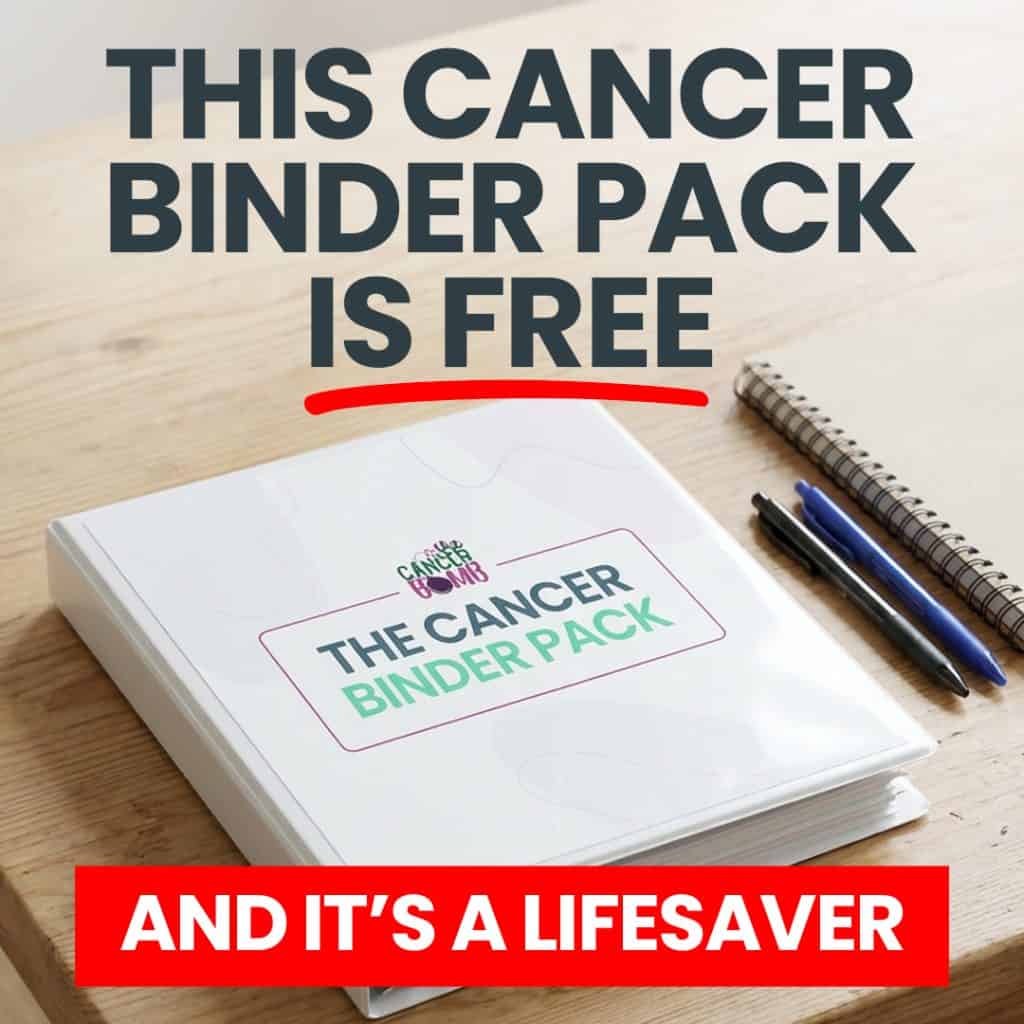
What’s Inside the FREE Cancer Binder Pack?
- Easy-to-follow setup instructions
- Printable organization pages
- Calendar and appointment tracking pages
- Inspirational quotes and encouragement
Most importantly, you’ll finally have a simple system that helps you keep all of the important cancer information organized and easy to find.
Because cancer brings enough stress on its own.
Finding paperwork shouldn’t be one of them.
You can get the FREE Cancer Binder Pack here…
Step 2: Write Down Every Question You Have (Even the Ones You Think You Should Already Know)

Listen… Your brain is in crisis mode right now.
There’s a very good chance you don’t remember half of what happened at your last appointment. Not because you weren’t paying attention.
It’s because someone just dropped a cancer bomb into your life, and your brain hit the emergency brakes.
I can’t tell you how many appointments I walked out of thinking:
“Wait… what did the doctor actually say?” And then three hours later, a hundred questions would start popping into my head.
That’s completely normal.
So grab your Cancer Binder and add some loose-leaf paper to the back if you haven’t already.
Then start writing down every question that comes to mind.
Seriously.
- Write down the obvious questions.
- Write down the scary questions.
- Write down the questions that wake you up at 2:00 AM.
Get these questions out of your head and onto paper.
Because one of the cruelest things about cancer is that you’re expected to make life-changing medical decisions while your brain is still trying to process what just happened.
If you’re sitting there thinking:
“I don’t even know what questions to ask.” You’re not alone.
Here are some questions that can help get the conversation started.
Questions About the Cancer
Start with the basics.
• What is the exact cancer type we are dealing with?
• What stage is it?
• What does that stage actually mean?
• Has the cancer spread anywhere else?
• Is this considered an aggressive cancer or a slower-growing cancer?
• What is the overall goal of treatment?
And if the doctor uses words that make absolutely no sense? Ask them to explain it again. Then ask them to explain it in plain English.
You are not being difficult. You are not wasting anyone’s time. This is your life, and you deserve to understand what’s happening.
Questions About Treatment
Once you understand the diagnosis, you’ll want to learn about the treatment plan.
• What treatment options are available?
• Which treatment do you recommend and why?
• What are the potential side effects?
• How soon does treatment need to start?
• What are the next steps?
• Are there any clinical trials available that we should consider?
• How optimistic are you that this treatment will work?
• What does the next six months look like?
• What about one year from now?
You may also want to ask how treatment could affect everyday life.
• Can I continue working?
• Will I be able to drive?
• Will I need help at home?
• What happens if I decide not to pursue treatment?
These are big, important questions. Questions worth writing down before you walk into the appointment.
Questions About the Practical Details

Nobody tells you this, but cancer quickly turns into a full-time job that you were never trained for.
You may want to ask common questions like:
• Who do I call if I have a problem or concern?
• Where will treatment take place?
• How long will appointments typically last?
• What tests will be scheduled next?
• Will I need someone to drive me to treatment?
• What should I be doing right now to prepare for what’s coming?
Most importantly, don’t trust yourself to remember everything.
Write your questions down. Take a picture and keep it in your phone. Or better yet, keep them inside your Cancer Binder, which you can take with you to the appointment.
Use whatever system works for you. Because right now, your job isn’t to memorize everything. Your job is simply to ask the questions and make sure you leave with the answers.
Bring Someone With You

One of the hardest things about cancer appointments is that sometimes you walk in expecting a routine update…
And walk out with news that changes everything.
“The cancer is spreading.”
“The treatment isn’t working.”
“Your blood counts are dangerously low.”
The moment words like that hit the room, it’s almost impossible to hear anything else.
Your brain immediately shifts into survival mode.
I consider myself a pretty good caregiver, but I can remember sitting in appointments where the anxiety hit me so hard that I completely shut down.
The doctor kept talking.
I was nodding.
I was physically sitting in the chair.
But mentally?
Gone.
I couldn’t tell you what was said after the bad news landed.
And honestly?
That’s completely normal.
Cancer appointments are often filled with life-changing conversations. Treatment decisions. Side effects. Scan results. Next steps. Difficult possibilities nobody wants to think about.
At the exact same time you’re trying to process fear, panic, grief, and about a thousand worst-case scenarios that are running through your head.
When emotions are running that high, it’s incredibly hard to listen, remember details, and think clearly.
That’s why I always tell people: If it’s possible, don’t go alone.
Bring a trusted friend or family member with you.
Not because you aren’t capable.
Not because you can’t handle it.
Because you’re human.
And sometimes even the strongest people need a second set of ears.
Ideally, bring someone who loves you deeply but isn’t carrying quite the same emotional weight you are in that moment.
That person can:
• Take notes while you’re listening
• Ask questions you may forget to ask
• Help clarify information before you leave
• Remember details you might miss
• Keep track of the next steps when your brain is completely overloaded
The truth is, you never know which appointment is going to bring difficult news.
Having another person in the room is one of the simplest ways to make sure important information doesn’t get lost in the middle of an emotional moment.
And as a bonus?
When the appointment is over and you’re sitting in the parking lot trying to process everything you just heard…
You’ll already have someone there to lean on.
Step 3: Get a Second Opinion Before Making Any Major Decisions
Let’s talk about second opinions for a minute. Because a lot of people feel weird about them.
Like they’re offending the doctor. Or wasting time. Or somehow being “difficult.”
You’re not.
Cancer is one of the biggest medical decisions you’ll ever face. Getting a second opinion isn’t being difficult—it’s being thorough.
In fact, good doctors expect it. Many encourage it.
And when you’re talking about a life-changing diagnosis, you deserve to know you’ve explored every option available to you.
A second opinion can provide:
• Confirmation that you’re already on the right path
• Different treatment recommendations
• Access to specialists who focus on your specific cancer
• Clinical trial opportunities
• Additional ot the right treatment options
• Peace of mind
And trust me… Peace of mind matters. A lot.
We always recommend having your case reviewed by a specialized cancer center whenever possible.
Even if you ultimately decide to receive treatment locally, having a major cancer center review your case gives you access to experts who see your kind of cancer every single day.
Sometimes they’ll recommend the exact same treatment your local oncologist suggested.
Great.
Now you can move forward knowing multiple experts agree on the plan.
Other times, the recommendations may be different. And that’s information worth knowing.
If you’re considering a second opinion, start by calling your insurance company to find out what’s covered. Many insurance plans cover cancer-related second opinions, and many large cancer centers have systems designed to move these consultations quickly.
Most importantly… Don’t confuse getting a second opinion with not trusting your doctor.
It simply means you’re making one of the biggest decisions of your life and want to feel confident moving forward.
That’s reasonable. That’s smart. That’s advocating for yourself.
Don’t Make Permanent Decisions While You’re Still in Shock
The first days after a cancer diagnosis are usually the worst time to make major decisions. Your brain is overloaded. Your emotions are running wild.
And you’re trying to process information you never wanted to hear in the first place.
I remember one appointment where my dad walked away ready to stop treatment altogether.
I cried for a week.
Looking back, we completely jumped the gun.
We heard the bad news, but we hadn’t gathered all the information yet. We hadn’t fully discussed the treatment options.
- We hadn’t explored additional consultations.
- We didn’t have a complete plan.
- We were reacting to fear.
And fear is a terrible decision-maker.
I’m not saying the situation is good. I’m saying it may not be as bad as it feels in this exact moment.
Before making any important decisions, make sure you’ve had time to discuss:
• The current status of the cancer
• Treatment options
• Risks and benefits
• Additional consultations or second opinions
• The doctor’s recommendations
• The next steps moving forward
Then make decisions from a place of understanding instead of panic.
Right now, you don’t need to solve everything. You don’t need to have all the answers.
You don’t need to decide the rest of your life today.
Your job is simply to gather as much information as you can, ask questions, and take the next step in front of you.
Even if it’s a baby step. Baby steps still move you forward.
Step 4: Call Your Insurance Company (Seriously, Do This Early)

I know. Calling the insurance company sounds like a real pain in the a$$. Minutes, possibly hours of your life you can’t get back.
Nobody wants to do it.
This one phone call can save you an unbelievable amount of stress, confusion, and money later.
Here’s something we didn’t know when my dad was diagnosed:
Your insurance company can actually become one of your biggest resources during treatment.
Not only can they explain what’s covered, where you can receive treatment, and what your out-of-pocket costs might be, but they may also have benefits and programs you don’t even know exist.
We certainly didn’t.
When my dad was receiving treatment, our insurance company offered a Cancer Resource Benefit that helped reimburse expenses when we sought treatment at what they considered a Center of Excellence.
For us, that meant treatment at Memorial Sloan Kettering.
Because of that benefit, we were able to receive reimbursement for things like:
• Food
• Lodging
• Mileage
• Train tickets
• Taxi fares
Now, there were rules.
Our treatment location had to be at least 100 miles from home to qualify. One Sloan location was actually closer than that, so it wasn’t covered.
The point is: If we hadn’t called and asked, we never would have known the benefit existed. And trust me, when cancer starts draining your bank account, every little bit helps.
Questions to Ask Your Insurance Company
Grab your Cancer Binder before you call.
Here’s a quick list of questions:
• What is my deductible for appointments?
• What is my out-of-pocket maximum?
• Is my cancer care team in-network?
• Is the treatment center covered?
• Do treatments require prior authorization?
• Are second opinions covered?
• What does my prescription coverage look like?
• Do you offer any cancer-specific benefits or resources?
What about my follow-up cancer care plan? Will my insurance cover those tests and scans.
• Is there a case manager who can help me coordinate care?
And please… Write everything down.
- Names.
- Dates.
- Reference numbers.
- Who you spoke with.
- What they told you.
Because insurance conversations have a magical ability to become impossible to prove later.
Ask About Travel Assistance

If treatment requires traveling to another city or cancer center, ask directly about assistance programs.
Some insurance companies offer reimbursement for:
• Hotels and lodging
• Mileage
• Gas expenses
• Public transportation
• Meals during treatment
The reimbursement may not cover everything.
But every dollar you don’t have to spend is a dollar you can put toward something else.
Don’t Stop With Insurance
Once you’ve talked to your insurance company, your next call should be to the cancer center itself.
Specifically, ask if they have:
• A social worker
• A financial navigator
• A patient resources center
These people are absolute lifesavers.
Seriously. They know about programs most families have never hear about.
They can help connect you with:
• Co-pay assistance programs
• Prescription medication assistance
• Medical bill assistance
• Travel and lodging grants
• Charity care programs
• Housing resources during treatment
• Local and national cancer organizations (American Cancer Society, National Cancer Institute)
When cancer enters your life, it can feel like you’re expected to figure everything out on your own.
You’re not.
There are people whose entire job is helping families navigate situations exactly like yours.
Ask for them. And ask early.
Not when you’re overwhelmed.
Not when the bills are stacked on the kitchen table, making eye contact with you.
Early.
Because the sooner you know what resources are available, the easier it becomes to focus on what really matters—taking care of yourself and your loved ones.
Step 5: Build Your Support Squad (Because Cancer Was Never Meant To Be Done Alone)

Can I say something that might be hard to hear? You cannot do this all by yourself. You shouldn’t have to.
And trying to carry everything alone usually ends in complete exhaustion.
Cancer requires a strong support system. Not because you’re weak. Because cancer is a LOT.
You need different kinds of people to help you get through this.
Your Ride-or-Die Person
This is your main person, the most important role.
The one who:
- Goes to important appointments
- Helps with decisions
- Takes notes
- Holds you together when things get scary
Usually this is:
- Spouse
- Partner
- Adult child
- Parent
- Best friend
- Sibling
- Your “call me at 2AM and I’m coming” person.
Your Practical Helpers

These are your logistics people.
The ones who can help with things like:
- Meals
- Rides
- Errands
- Laundry
- House stuff
- Childcare
- Pet care
Because life doesn’t magically pause because cancer showed up. People still need dinner. Dogs still need to be fed. Bills still need to be paid.
Annoying… but true.
Your Emotional People
Not everybody is good at emotional support. And that’s okay.
Find your people who can:
- Sit with hard emotions
- Listen without trying to fix everything
- Make you laugh
- Pray with you
- Bring comfort without creating drama
Protect these people. They’re gold.
Your Information Person
One of the exhausting parts of cancer? Repeating updates 85 times.
- “How did the appointment go?”
- “What did the scan say?”
- “When does treatment start?”
You are allowed to delegate this.
Seriously.
Pick somebody to help manage updates and keep everyone in the loop. They can set up a group text, a private Facebook group or a platform like Caringbridge to share updates with friends, family, co-workers, neighbors, and community members.
Whatever works. Save your energy. You’re going to need it.
How To Actually Ask For Help
I get it. This part is hard. Especially if you’re usually the helper.
But people genuinely want to support you.
They just don’t know HOW.
Instead of:
“Let me know if you need anything.”
Try specific asks.
Like:
- “Could you drive me to treatment on Tuesday?”
- “Can you bring dinner on Thursday?”
- “Can you pick up my groceries if I order them?”
- “Can you sit with me during chemo?”
Specific requests make helping easier.
And honestly?
*People often feel relieved when they know exactly what to do.*
Step 6: Set Up Meal Support IMMEDIATELY

Don’t wait until you’re completely wiped out to think about food.
Cancer treatment is exhausting. Cooking becomes harder. Taste buds go rogue.
Some days opening the refrigerator feels like too much work.
Meanwhile… Everyone still wants dinner. Annoying, but true.
So let’s make life easier.
Meal Train
One of the best things you can do. Friends sign up. Meals show up.
You don’t have to answer the dreaded:
“What can I do to help?” Twenty-seven times. Win.
This FREE APP can help you set up a meal train…
Done-For-You Meal Plans (Because You Have Enough to Stress About)
The last thing most cancer families need is another decision to make.
When you’re juggling appointments, medications, phone calls, paperwork, and everything else cancer throws at you, figuring out what’s for dinner can feel impossible.
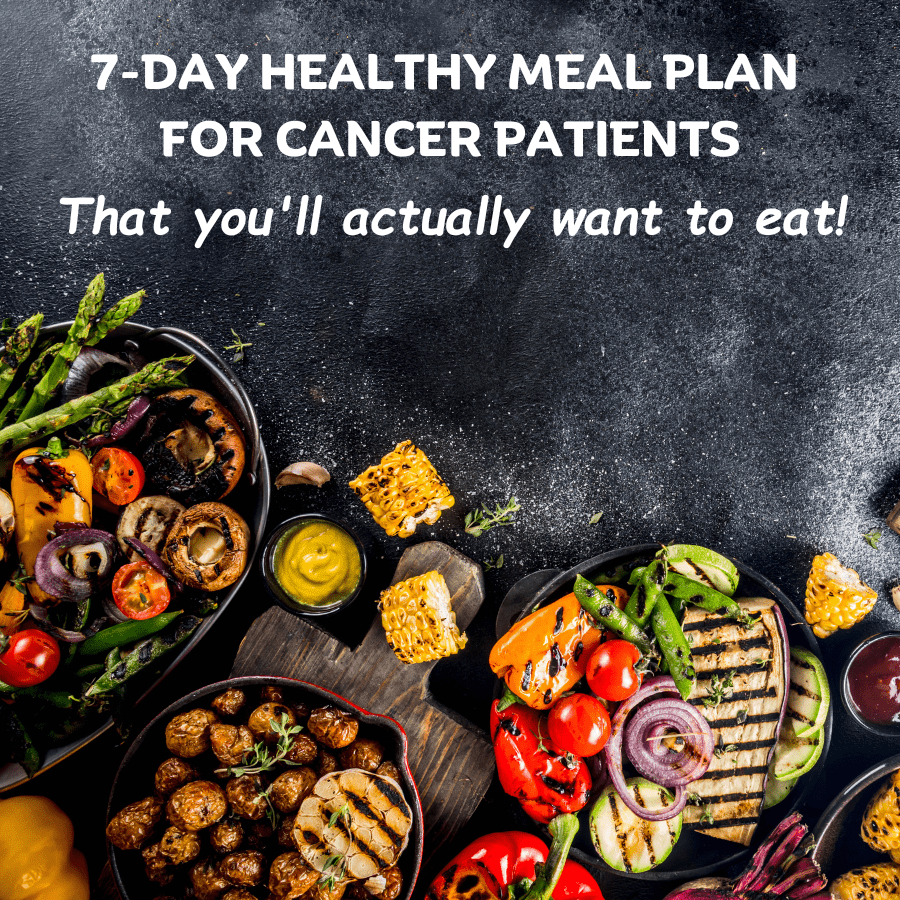
That’s why we created these Done-For-You Meal Plans. A healthy diet is a major contributor to your overall health.
No meal planning.
No staring into the refrigerator hoping inspiration strikes.
No wandering the grocery store wondering what to buy.
Simply add the ingredients to your grocery pickup or delivery order and you’re ready to go.
Choose the ideas that work best for your family:
✔ 7-Day Meal Plan — One week of simple, easy-to-make meals.
✔ 14-Day Meal Plan — Two full weeks of meals planned out for you.
✔ 16 Healthy Meals — A collection of nutritious, family-friendly meals you can mix and match whenever you need them.
Because some days, having one less thing to think about is a huge win.
Quick Tip: USE Grocery Pickup or Delivery
Set this up BEFORE you desperately need it.
- Instacart.
- Walmart delivery.
- Amazon.
- Local grocery delivery.
Whatever exists in your area. Future-you will thank you. Especially on the days when you’re barely holding it together.
Quick Tip: Freezer Meals
If you have energy now? Prep a few things. If you don’t? Ask somebody to help.
People LOVE real ways to give practical support to cancer families. Give them something useful to do.
Quick Tip: Gift Cards Count Too
Listen… restaurant gift cards are a survival tool.
Keep a running list of places that deliver.
You’ll use it.
Step 7: Who To Tell (And Who You Absolutely Do NOT Owe An Update To)

Okay.
Let’s talk about one of the weirdest parts of a cancer diagnosis.
Suddenly… people want information.
Lots of information.
- Texts.
- Calls.
- Messages.
- Questions.
- Concern.
- Opinions.
Sometimes support. Sometimes… complete nonsense.
And before you know it, you’re emotionally exhausted from managing everyone else’s reaction to YOUR diagnosis.
So let me lovingly remind you of something:
You do not owe everybody your story.
You get to decide:
- Who knows
- When they know
- How much they know
- Whether you’re sharing at all.
This diagnosis belongs to you.
People You May Want To Tell Early
Usually this includes:
- Your primary support person
- Immediate family
- Close friends helping with care
- Your employer (because treatment or appointments will affect work)
- Your children (in age-appropriate ways)
But beyond that?
You decide.
People You Do NOT Have To Tell
Read this twice.
You do not have to tell:
- Social media
- Casual coworkers
- Distant relatives
- Neighbors
- Random acquaintances
- Emotionally draining people
- Anybody who turns your diagnosis into their personal crisis
Protect your peace.
Seriously.
This is not the season for unnecessary emotional management.
“But What Do I Even Say?”
You don’t need a perfectly crafted announcement.
Simple works.
Something like:
“I was diagnosed with cancer. We’re gathering information and figuring out next steps. I’ll share updates when I’m ready.”
Done. Short. Clear.
No performance required.
And if somebody says something unhelpful? (Because unfortunately… some people absolutely will.)
You are allowed to respond with:
“I appreciate your concern, but I can’t handle that conversation right now.”
Or honestly?
No response at all. Also acceptable. Boundaries are healthy.
Step 9: Handle Some Practical Stuff Early (Because Crisis-Mode Is A Terrible Time To Hunt For Things)

Okay.
I know.
This section is not fun.
But Future You will be wildly grateful you handled a few practical things now.
Because treatment days can get busy fast.
Work Stuff
If you’re working…start understanding what benefits exist.
Things like:
- Sick time
- FMLA
- Short-term disability
- Long-term disability
- Workplace accommodations
- HR procedures
And yes…document everything.
- Emails.
- Dates.
- Paperwork.
- Save copies.
Because administrative headaches are not the side quest we need during cancer.
Legal Stuff (I Know… Nobody Wants This Conversation.)
Can we have a real moment for a second?
Creating legal documents is not “giving up.”
It’s being prepared.
That’s it.
Things to consider:
- Healthcare proxy / medical power of attorney
- Living will / advance directive
- Financial power of attorney
- HIPAA forms
- Updated will
Not because you’re expecting the worst.
Because cancer tends to force important conversations faster than we planned.
Many hospitals and cancer centers can help connect families with:
- social workers
- legal resources
- patient support
Ask them. You do not have to figure this out alone.
Household Logistics
Tiny boring things become surprisingly stressful when you’re exhausted.
So think about things like:
- Auto-paying bills
- Organizing important passwords
- Childcare plans
- Pet care backup plans
- Emergency contacts
Basically…
We’re reducing future chaos wherever possible. Not perfection, just making life easier.
Step 10: Prepare Your Home For Treatment (Your Exhausted Self Deserves This)

Can I tell you something nobody really explained to us?
Sometimes cancer treatment makes very normal everyday tasks… feel weirdly hard.
Things like:
- walking upstairs
- making food
- showering
- finding comfortable clothes
- grabbing a charger
None of these things are impossible.
They’re just harder when you’re exhausted, nauseous, sore, anxious… or all four simultaneously.
So if you can?
Let’s make your environment work FOR you.
Create A Recovery Spot
- Think comfort.
- Convenience.
- Minimal effort.
Some ideas:
- Water bottle nearby
- Medications within reach
- Phone charger
- Tissues
- Blanket
- Snacks
- Lip balm
- Notebook
- Heating pad
- Comfortable pillows
Basically…create a little “I don’t feel good but everything I need is right here” station.
Bathroom Setup
Treatment side effects can be unpredictable.
So stock a few basics.
Helpful things might include:
- Gentle toiletries
- Soft toilet paper
- Anti-nausea supplies
- Easy-to-reach medications
- Shower chair if balance or fatigue becomes an issue
Simple adjustments make a big difference.
Kitchen Survival Mode
Forget Pinterest meals. We are going practical.
Stock things that are:
- easy
- quick
- comforting
- simple to eat
Some ideas:
- broth
- crackers
- yogurt
- smoothies
- soups
- frozen meals
- easy protein snacks
- hydration drinks
And yes…Paper plates count as self-care during cancer.
Comfort Supplies Worth Having Around
Helpful things might include:
- loose comfy clothes
- slip-on shoes
- thermometer
- extra chargers
- heating pad
- ice packs
- entertainment
- symptom notebook
You don’t need everything. You just need enough to make hard days a little easier.
That’s the goal.
What NOT To Do After A Cancer Diagnosis

This section matters.
Because when life feels terrifying… our brains desperately want control.
Which means people sometimes do things that accidentally create MORE stress.
Let’s avoid that.
1. Please Step Away From Google Prognosis Spirals
Listen.
I know you’re going to want to Google.
Everyone does.
But Googling survival statistics at 2:17AM?
Not the move.
Here’s the problem.
Online information is often:
- outdated
- not specific to your cancer
- not specific to YOUR situation
- missing context
- terrifying
You need reliable information. Your medical oncologist knows YOUR case. Google does NOT.
Use medical research carefully.
Protect your mental health.
2. Do Not Make Massive Life Decisions In Week One
Maybe don’t:
- quit your job
- sell your house
- move across the country
- burn your entire life down
Immediately after diagnosis, you are in shock. Shock is not usually where our best decision-making lives.
Slow down. Gather information. Breathe.
3. Do Not Ignore Red Flags About Your Medical Team
Can I be blunt?
You deserve doctors who:
- listens
- explain things
- answers questions
- treats you with respect
If somebody consistently makes you feel:
- dismissed
- rushed
- confused
- embarrassed
- unheard
Pay attention to that. Advocating for yourself matters. A LOT.
4. Please Don’t Let Anyone Cure Your Cancer With Celery Juice

I had to say it.
Because once cancer enters the chat… everybody suddenly becomes an oncology expert.
You will hear:
- miracle cures
- random supplements
- wild nutrition advice
- somebody’s cousin’s Facebook protocol
- deeply questionable internet opinions
People usually mean well. Usually.
But please talk to your actual medical team before trying supplements, diets, or alternative therapies, or anything else.
5. Don’t Isolate Yourself
This one is hard.
Because sometimes cancer makes you want to disappear.
You don’t want to explain. You don’t want visitors. You don’t want one more conversation.
Completely understandable.
But try not to carry this entirely alone.
- Connection matters.
- Support matters.
- You matter.
Even if your version of support right now looks like:
- one trusted person
- a therapist
- your church community
- an online cancer group
- a sibling who sends memes
Support counts.
6. Don’t Spend 17 Hours A Day Researching Cancer
Being informed? Good.
Turning medical research into a full-time anxiety hobby?
Less helpful.
Ask me how many families accidentally disappear into internet rabbit holes.
Set limits. Gather information. Then step away sometimes.
- Watch something funny.
- Take a walk.
- Eat the ice cream.
- Listen to music.
You are still a human being outside of this diagnosis.
7. Do Not Forget To Keep Living

This one feels important. Cancer is a massive part of life. But it is not ALL of life.
Quality of life matters. So, so much.
You’re still allowed to:
- laugh
- watch terrible reality TV
- celebrate birthdays
- eat takeout
- sit outside
- play with your dog
- drink coffee with a friend
- have joy
You are not betraying your diagnosis by having moments of normal life.
You are surviving something incredibly hard.
And tiny moments of normalcy matter more than people realize.
P.S. Reading this post probably gave you a good overview of what needs to happen during the first 30 days.
But if you’re wondering:
“What do I do tomorrow?”
“What should I focus on first?”
“How do I keep track of all of this?”
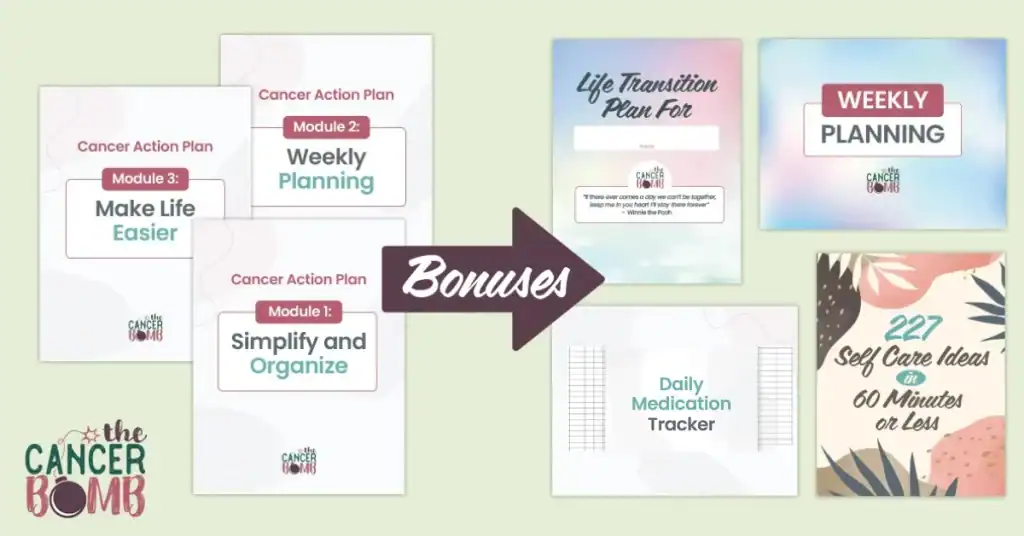
The Cancer Action Plan was designed to answer those questions.
Inside you’ll find 14 guided action steps that walk you through the practical side of a cancer diagnosis—from getting organized and building your support system to managing appointments, paperwork, finances, and everyday life.
Think of it as your next set of instructions when everything feels overwhelming.
Click here to check out the Cancer Action Plan.
This post may contain affiliate links, which means we may receive a small commission, at no extra cost to you, if you make a purchase through a link. We only recommend products that we use and LOVE. You can see our full disclosure here for further information.
We are a participant in the Amazon Services LLC Associates Program, an affiliate advertising program designed to provide a means for us to earn fees by linking to Amazon.com and affiliated sites.